News Details
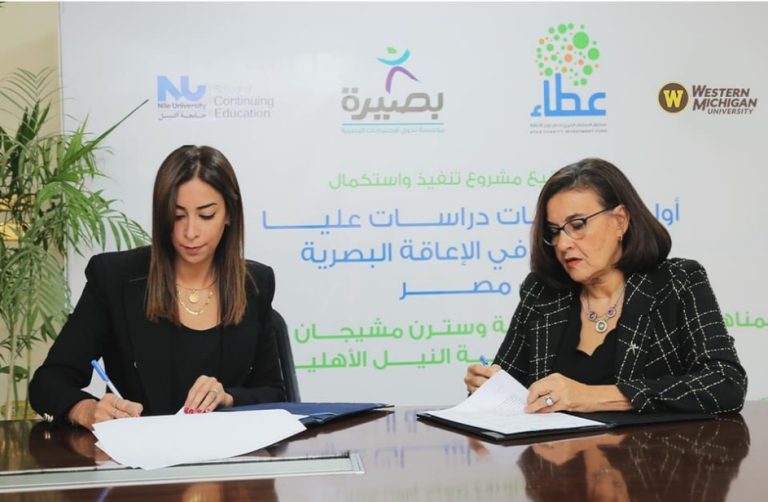
Ataa Fund signed a cooperation protocol with Baseera Foundation to implement Egypt’s first specialized postgraduate diploma programs in visual impairment.
Date Released
03 February, 2026
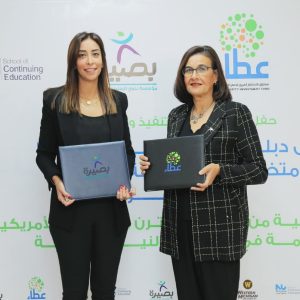
Ataa Fund signed a cooperation protocol with Baseera Foundation to implement the first specialized postgraduate diplomas in visual impairment in Egypt, offered by Nile University, with international curricula and academic supervision from Western Michigan University (USA).
The protocol was signed by Ms. Amira El-Refaie, Executive Director of Ataa Fund, and Ms. Doaa Mabrouk, Executive Director of Baseera Foundation.
The diplomas aim to graduate highly qualified professionals with advanced practical competencies, specializing in the rehabilitation of persons with visual impairments at both educational and social levels.
Graduates will be professionally equipped to work with persons with visual impairments and support their independence through evidence-based, professional practices that promote social inclusion and enable them to fully exercise their rights.
The program introduces two accredited diplomas:
Low Vision Specialist Diploma
Orientation, Mobility, and Navigation Specialist Diploma
These diplomas are based on internationally recognized curricula adapted to the Egyptian context and are delivered in both English and Arabic.
The specialized postgraduate diplomas in visual impairment represent an important step toward practical implementation of the Convention on the Rights of Persons with Disabilities (CRPD) and a transformative milestone in advancing the future of persons with visual impairments.
The diplomas feature intensive and mandatory field training, which is a core requirement for certification.
Field training will be conducted at one or more of the following institutions: Baseera Foundation, associations and schools for the blind, inclusive schools serving students with visual impairments, and other relevant entities.
The protocol provides access to a wide range of beneficiaries, including professionals working in ministries, school teachers, and staff of organizations serving persons with visual impairments, thereby supporting the overall objectives of the initiative.
Graduates of the diplomas will be eligible to apply for international accreditation examinations in the United States, the sole international authority specialized in testing and licensing visual impairment professionals.
In addition, subsidized scholarships will be provided by Ataa Fund.
For more information about the diplomas, inquiries can be directed to the College of Continuing Education at Nile University via phone at 01015000820 or email: [email protected]
.
It is worth noting that Ataa Fund is the first charitable investment fund dedicated to supporting persons with disabilities, aiming to create effective and sustainable improvements in their quality of life, enabling independent living, full access to rights, and equal opportunities alongside peers without disabilities.
The Fund is distinguished by its sustainable funding model, whereby expenditures are made from investment returns rather than the principal capital.
These returns are allocated across multiple entities, projects, sectors, geographic areas, and disability types to maximize impact for persons with disabilities.
To learn more about the Fund’s efforts, please visit the official website: https://ataafund.com
Baseera Foundation is an Egyptian non-profit organization distinguished by its integrated development approach, beginning with medical support and awareness-raising, and extending to rehabilitation services for persons with visual impairments.
These services include early intervention, education, social rehabilitation, technical support, specialized community training, public awareness on visual impairment, as well as conducting medical screenings and outreach convoys in underserved schools and villages, and providing necessary medical interventions.